Showing posts with label Agribusiness. Show all posts

Sunday, 3 March 2013

The Big 10: Behind the Brands campaign

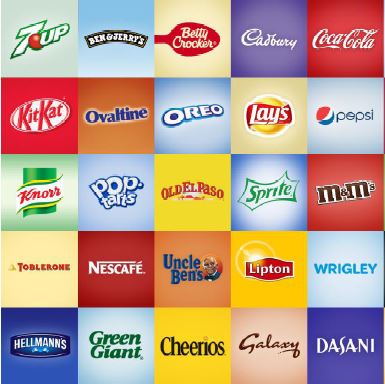
The social and environmental policies of the world’s ten biggest food and beverage giants are not fit for modern purpose and need a major shake-up, says international agency Oxfam. The “Big 10” food and beverage companies – that together make $1bn a day – are failing millions of people in developing countries who supply land, labour, water and commodities needed to make their products. Behind the Brands – part of Oxfam’s GROW campaign to fix the broken food system – for the first time ranks the agricultural policies, public commitments and supply chain oversight of Associated British Foods (ABF), Coca Cola, Danone, General Mills, Kellogg’s, Mars, Mondelez, Nestlé, Pepsico and Unilever.

ABF (19%), Kellogg’s (23%) and General Mills (23%) scored most poorly. They have weaker policies than Coca-Cola (41%), Unilever (49%) and Nestle (54%) for example. “Some companies recognize the business case for sustainability and have made important commitments that deserve praise” says Jeremy Hobbs, Executive Director for Oxfam International. “But none of the ten biggest food and beverage companies are moving fast enough to turn around a 100-year legacy of relying on cheap land and labour to make mass products at huge profits, with unacceptably high social and environmental costs. No company emerges with a good overall score. Across the board all ten companies need to do much more. ”

The Behind the Brands campaign reveals:
● While some of the “Big 10” have publicly committed to women’s rights, none have committed to eliminating discrimination against women throughout their supply chains.
● None of the companies have adequate policies to protect local communities from land and water grabs, despite all of them sourcing commodities plagued by land rights violations, such as palm oil, soy and sugar. Not one company has declared ‘zero tolerance’ against land grabs in their supply chains
● All ten companies are overly secretive about their agricultural supply chains, making their claims of ‘sustainability’ and ‘social responsibility’ difficult to verify. Nestle and Unilever are most open about the countries they source from, but no company is providing enough information about their suppliers.
● Companies are generally increasing their overall water efficiency but most have failed to put policies in place to limit their impact on local water sources. Only Pepsi has publicly recognized water as a human right and committed to consult local communities. Nestle has developed guidelines for its suppliers to manage water and was ranked top for policies on water.
● All of the companies have taken steps to reduce direct emissions, but only five – Mondelez, Danone, Unilever, Coca-Cola and Mars – publicly report on agricultural emissions associated with their products. Unilever alone has committed to halve its greenhouse gas footprint by 2020. None have yet developed policies to help farmers in their supply chains to build resilience to climate change.
● None have publicly committed to pay a fair price to farmers or fair business arrangements with them across all agricultural operations. Only Unilever – which is top-ranked for its dealings with small-scale farmers – has specific supplier guidelines to address some key issues faced by farmers.

According to Oxfam, it’s time these companies take more responsibility for their immense influence on poor people’s lives. 80% of the world’s hungry people work in food production and these companies employ millions of people in developing countries to grow their ingredients. They control hundreds of the world’s most popular brands and have the economic, social and political clout to make a real and lasting difference to the world’s poor and hungry. “Analyzing their social policies is an important first step. These policies indicate a company’s intent to do good. They are ultimately how consumers and producers can begin to hold them to account. No brand is too big to listen to its customers. If enough people urge the big food companies to do what is right, they have no choice but to listen. By contacting companies on Twitter and Facebook, or signing a petition to their CEO, consumers can do their part to help bring lasting change in our broken food system by showing companies their customers expect them to operate responsibly.”

The ‘Behind the Brands’ campaign has been launched in more than 12 countries including the US, Mexico, China, Brazil and across Europe. Its first public action will target Nestle, Mondelez and Mars for their failure to address inequality faced by women who grow cocoa for their chocolate products. Oxfam is urging the three companies to do more to know and show how women are treated in their supply chains, create an action plan to address inequality for women in their supply chains and engage in advocacy to influence other powerful actors to do the same.

Oxfam has engaged with all 10 companies during the last year who have cooperated in providing data to inform this scorecard. The scorecard will be updated if companies change their policies. Oxfam rated the companies on their policies on seven topics: how they ensure the rights of the workers and farmers who grow their ingredients, how they protect women’s rights, management of land and water use, climate change and the transparency of their supply chains, policies and operations. It did not review other important policies such as those dealing with nutrition, tax and waste, for example.

>>> More information about the campaign >>> here.

>>> Download of the study >>> here.

Thursday, 1 March 2012

(Bio-)fueling injustice? EU driving global biofuel production

The European Union’s biofuel policy continues to threaten food security and increase land grabs in Africa, shows a new report by the EuropAfrica platform and FIAN, (Bio)fueling injustice: Europe’s responsibility to counter climate change without provoking land grabbing and compounding food insecurity in Africa. The report is released as the EU is set to review its biofuel policy in 2012 in line with environmental impacts. “Imported industrial biofuels for European renewable energy exacerbate land grabs in Africa and fuel violations of the right to food”, says Nora McKeon coordinator of EuropAfrica. “The EU has to realise that its energy and agricultural policies have global impacts, often affecting the most vulnerable in poor countries. Decision makers cannot ignore the evidence; it’s time for a total re-think of biofuel policy.”

The report shows that 66% of the land grabs in Africa are intended for biofuel production, some 18.8 million hectares. Among the biggest investors are companies from Europe, as case studies from Senegal and Mali show, with European investments likely to increase further. “We want to grow food for people in Africa, not for fuelling cars in Europe. The switch to biofuel crops in Senegal has been a failure. Productivity has fallen sharply since we started trying the Jatropha biofuel crop, and many farmers are feeling cheated. We call on the European Union to drop its renewable energy target for biofuels until measures are in place which ensure that the right to food is not violated”, says Marius Dia, of CNCR (Conseil National de Concertation et de Coopération des ruraux du Sénégal).

Despite contrary claims, the EU is highly dependent on imports. Already in 2008, the EU imported almost 40 percent of its biofuels or biofuel feedstock. The study further finds that the EU and its Member States violate their human rights obligations by not having conducted an adequate assessment of the impact of the biofuel policy on human rights and by not regulating European companies and financial actors. According to Blandine Bouniol, Policy Coordinator at CONCORD, the European NGO Confederation of Relief and Development NGOs, the EU’s good intention to fight climate change by promoting renewable energy is turning into a disaster. Europe is outsourcing its production, getting a ready supply of biofuels at the expense of the environment and people in the developing world.

Friday, 21 October 2011

No land investments without consent of local communities, CIDSE says

This week, the UN Committee on Food Security (CFS) held its 37th session in Rome, which looked at food price volatility, gender, food security and nutrition and agricultural investment. The session was meant to open with the adoption of new voluntary guidelines on land tenure, but governments were unable to finalise negotiations. The international alliance of Catholic development agencies CIDSE welcomes the efforts put into the talks so far, while urging governments to finalise negotiations as soon as possible and move towards putting the guidelines in practice. The Voluntary Guidelines on the Responsible Governance of Tenure of Land, Fisheries and Forests are meant to protect land tenure of small scale food producers, urgently needed in view of land grabbing which has dramatically increased in recent years.

CIDSE and other civil society organisations who participated in the negotiations in Rome highlight the progress made. Nearly three quarters of the text of the Voluntary Guidelines were successfully negotiated, including critical issues such as the recognition and protection of customary tenure, the tenure of forests and fisheries and the protection of rights defenders responding to the critical issue of their criminalisation. Several controversial issues, such as those relating to investments in agriculture remain open, however. According to CIDSE, “The land belongs to those who work it. Acknowledging the right of small farmers and local communities to cultivate their own land is an important step towards food security, as their right to food should always have priority over land investments.”

The issue of land governance is of growing importance. As much as 227 million hectares of land in developing countries (about the size of Western Europe) has been sold or leased since 2001. The bulk of these have taken place in the last 2 years, an overwhelming majority in Africa. The increase in land grabbing is linked to the 2007-2008 food price crisis which has triggered the interest of investors and governments in agriculture because of its profit making potential. The demand for food, timber, carbon sequestration and mineral exploration, as well as agro-fuels directives in developed countries, are key drivers of land grabbing. Investors include national elites, foreign companies and international governments, including oil rich states and China looking to secure food for their populations.

Tuesday, 30 August 2011

Pastoralism - Part of the answer to drought in Africa

Mobile pastoralism is part of the solution to the drought in the Horn of Africa, according to the IUCN-hosted World Initiative for Sustainable Pastoralism (WISP). “This crisis was predictable and predicted,” says Pablo Manzano, who works with IUCN in its East and Southern Africa Regional Office and is Global Coordinator of WISP. “Irrigated crop farming and abandonment of pastoralism are being proposed as solutions in order to prevent future crises. But analyses on the subject often don’t take into account the ecological, economic and social factors that make pastoralism highly sustainable in drylands.”

In the current crisis in the Horn of Africa, media and economic experts are accusing pastoralism of being an ineffective livelihood that is periodically subjected to similar crises. Irrigated crop farming is proposed as a panacea but it deepens overuse of water resources and exacerbates conflicts. Livestock mobility is a much more rational land use, allowing the exploitation of patchy resources in drylands and is also an important tool for climate change adaptation.

Securing land tenure for pastoralist communities is needed to conserve resources so that droughts are countered and capital inputs are leveraged for development. Long-term strategies should be based on allowing people to move with their livestock across manmade boundaries, which have been key during other food crises. But even if the present crisis was predicted almost a year ago, no action was taken. Famines are more related to political turmoil than to the amount of rainfall, and they do not occur unless pastoral areas have other problems.

“Investments in drylands by government and international aid agencies have to be reoriented, taking into account local ecological conditions as well as local capacities,” adds Manzano. “Investments should include infrastructure to export pastoralist products, financial services for remote areas, high-quality adapted education, and skills for securing land rights, ideally adapting traditional management to modern legal frameworks. Most of these solutions have been adopted by pastoralists themselves in different parts of the world, often with no external help. It becomes clear from overwhelming evidence from around the world that to use investment to support pastoralism, rather than replacing it, is the only realistic solution.”

Friday, 24 June 2011

G20 action plan fails to address root causes hunger

According to CIDSE, the catholic development network, the G20 Agricultural Ministers’ Action Plan on Food Price Volatility and Agriculture contributes little to tackling global hunger. The alliance says the plan is more concerned with mitigating the consequences of price volatility than with addressing its root causes. It is “a band aid for a big gaping wound; it won’t cure the ailing global food system,” as Gisele Henriques, CIDSE’s food expert said. “Although the recent spike in commodity prices has worsened the situation, we should not forget that even before the 2008 food price crisis there were over 800 million hungry. We must look beyond the markets for an answer to this injustice.”

The action plan, which has been significantly diluted during the negotiations on 22-23 June in Paris, aims at improving agricultural production, increasing market information and transparency, strengthening international policy coordination, improving and developing risk management tools for governments, firms and farmers, as well as improving the functioning of agricultural commodities’ derivatives markets. G20 Agricultural Ministers propose the establishment of emergency food stocks, necessary to address food crises, ignoring regulatory stocks which could resolve food price volatility in the mid-term. CIDSE urges the G20 to support the re-establishment of regulatory stocks, at local, national and regional levels, which would help curb the excessive volatility in prices for both consumers and producers. Yet matters of financial regulation of the food markets agricultural ministers left to their fellow financial ministers and central bank governors.

CIDSE emphasises that current production models must be reconsidered. A recent report by the UN Special Representative on the Right to Food demonstrates that agro-ecological innovations can double production in a period of 3 to 10 years and it is precisely this kind of production model that must be supported. This also means creating food policies which strengthen local production by small holder farmers, because they account for 75% of the world’s hungry. The G20 also failed to take serious its own inter-agency report on price volatility. This report, coordinated by the FAO and the OECD, underlines the negative role of biofuels on price volatility and recommends a rethink of policies which incentivise biofuels, adopted by many G20 States members. “The poor progress made at the Paris meeting confirms once more that the G20 is not the most legitimate forum to pre-determine decisions on global food security. It should reinforce more democratic multilateral bodies such as the FAO’s Committee on World Food Security instead,” said Henriques.

Thursday, 16 June 2011

CONCORD: EU should act against land grabbing in developing countries

EuroStep – As a reaction to the European Commission’s 2007 Communication on “Advancing African Agriculture” (AAA), the European NGO confederation for relief and development (CONCORD) submitted a monitoring report to the European Parliament’s (EP) Development Committee, addressing the impact of land grabbing. Besides analysing the implications of EU and member state policies on the issue of land grabbing, the 2009-2010 monitoring report specifically focuses on three case studies from African countries, namely Uganda, Mozambique and Ethiopia. It further assesses the role of the European private sector and its linkages with state activities and scrutinizes the impact development assistance and trade and investment policies may have on land grabbing.

In light of increasing large scale land acquisitions that threaten the subsistence of local farmers in developing countries, the report calls on the EU to “initiate as soon as possible the needed international regulation to prevent such land acquisitions, including a legally binding agreement related to the proper regulation of financial and other actors active in agricultural investment”. It moreover stresses that such measures should entail direct references to the supremacy of human rights provisions, with stipulations for punishing human rights abuses by investors and states under international law. To this end, the EU should further “strengthen the implementation of human rights based land policies in ODA, particularly when supporting the implementation of the AU Land Policy Guidelines”, the report reads.

With regards to the EU’s recently adopted renewable energy targets, CONCORD calls upon the EU to scrap these targets and to freeze all policies encouraging “the use of agrofuels for the transport sector until and unless the [aforementioned] regulations … are in place”.

Tuesday, 30 March 2010

Agribusiness and the right to food

“Agribusiness can play a key role in realizing the right to food. But States have to give more support to their small producers and push corporations to change their pricing and standards policies”, said the UN Special Rapporteur on Right to Food, Olivier De Schutter, as he presented his second annual report to the UN Human Rights Council on 5 March 2010. His report concludes that in an increasingly globalized food sector dominated by large transnational corporations, smallholders have a very limited number of buyers, and are in a deeply unequal bargaining position in respect of a fair price for their crops. In these circumstances, sourcing and pricing policies of commodity buyers have a huge and sometimes negative impact on the right to food. This situation partly explains why smallholders in developing countries are the single most important group of those suffering hunger in the world today.

To address this situation and the specific needs of smallholders, the Special Rapporteur makes a series of recommendations to the agribusiness corporations and the States. According to the report, States have a number of tools they could use to strengthen the position of smallholders and allow them to reap a larger proportion of the food dollar in their transactions with buyers. In particular, De Schutter said “States could support the establishment of farmers’ cooperatives through appropriate legal frameworks, capacity building programs or tax incentives, thus enhancing the capacity of small producers to obtain higher prices when they seek to sell their produce. These organizations present many advantages in terms of services and information, and help the producers to implement the increasingly complex norms and requirements of buyers and public authorities active on regional and global food markets.

The UN Special Rapporteur also called on States to act against unfair practices of corporations, excessive concentration in the food chain, or abuses of dominant position acquired by certain actors. National competition laws play a fundamental role here. “Competition law as it currently stands is not appropriately tailored to the circumstances that weaken the bargaining position of smallholders”, he explained. “States where suppliers are based should extend the reach of their competition laws to foreign buyers whose abuses affect national sellers, developing regional responses if they are concerned about being vulnerable as a small economy.”

Noting that the pressure to produce at low prices was increasing on suppliers, leading to repress wages of agricultural workers and to the casualization of this workforce, the Special Rapporteur also made a number of recommendations on this issue. States must establish a clear legal framework with robust enforcement mechanisms. But in addition employers have a responsibility to respect the right to food, even where laws are insufficiently protective of agricultural workers or where the existing labour legislation is inadequately monitored: agribusiness companies must not contribute, directly or indirectly, to human rights abuses through their relationship with suppliers.

Please find the full report >>> here.